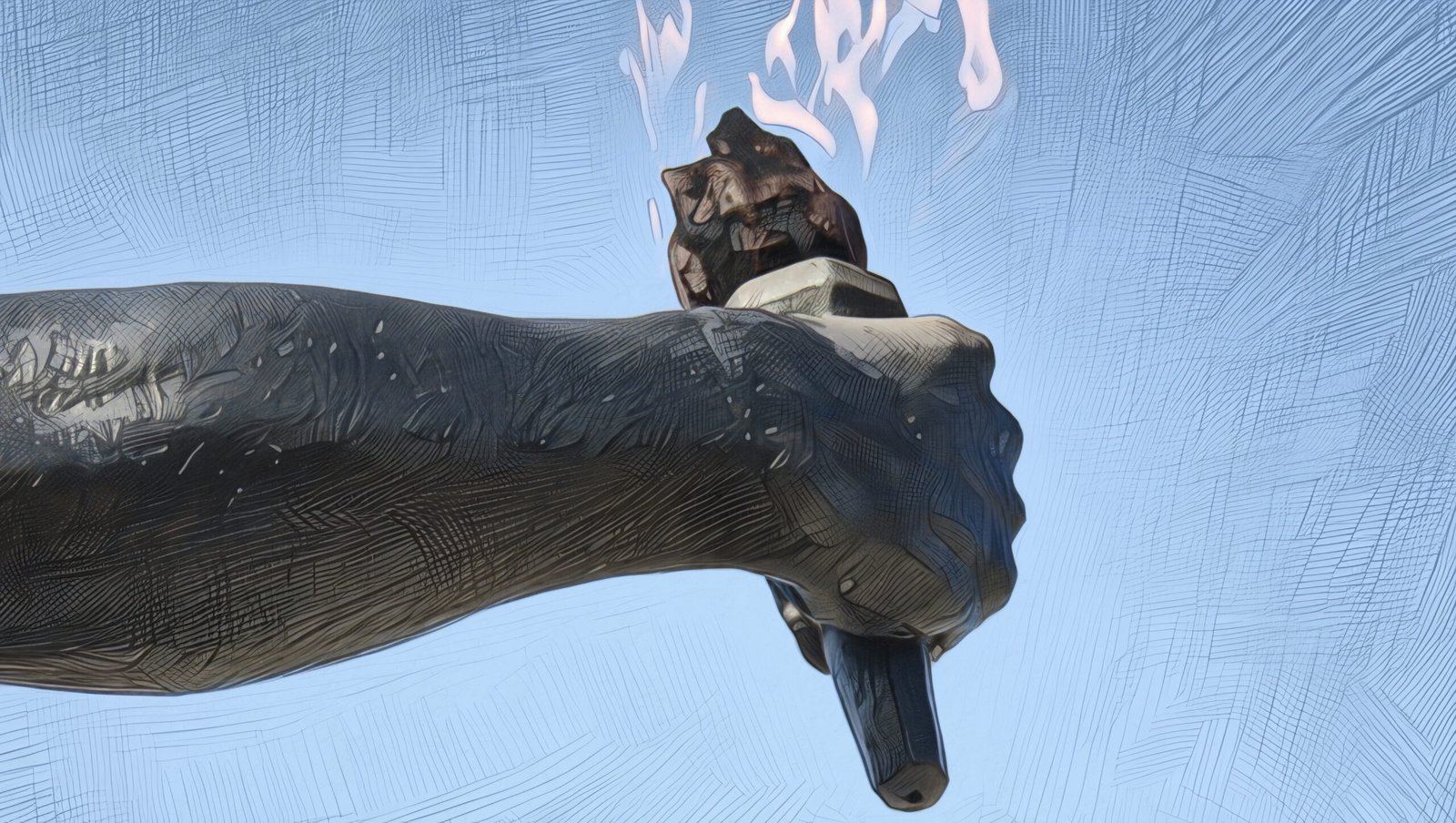

A Memorial Day tribute to the students, faculty, and alumni who gave their lives in service to our Nation
As the morning sun rises over the Tennessee River and casts its golden light across the University of Tennessee campus, it illuminates more than just the iconic landmarks that define our beloved institution. It reveals the sacred ground where generations of Volunteers have walked—students, faculty, and alumni who would answer their nation’s call to service, many never to return home.
Tennessee earned its cherished nickname as the “Volunteer State” not through political decree, but through the extraordinary courage of its citizens. When the call reached Tennessee during the War of 1812, 3,500 volunteers enthusiastically answered, demonstrating a spirit of service that would become the hallmark of our state. Their gallantry and willingness to fight when called upon earned their home state a new nickname: “The Volunteer State.”
This same volunteer spirit has flowed through the veins of the University of Tennessee since its founding in 1794, two years before Tennessee became the 16th state. Today, as we pause to honor those who made the ultimate sacrifice, we reflect on more than two centuries of service, sacrifice, and the precious lives lost in defense of freedom and democracy.
The Foundation of Service: Early Military Tradition
The University of Tennessee, Knoxville is a public land-grant research university in Knoxville, Tennessee, United States. Founded in 1794, two years before Tennessee became the 16th state, our institution has been intertwined with military service from its earliest days. The connection between education and military preparedness became formalized during World War II when UT was one of 131 colleges and universities nationally that took part in the V-12 Navy College Training Program which offered students a path to a Navy commission.
From these early days, UT students and faculty understood that education and service to country were inseparable ideals. This understanding would be tested repeatedly throughout the 20th and 21st centuries, as young Volunteers left their studies to serve their nation, many never returning to complete their degrees or pursue their dreams.
World War I: The Great War’s Heavy Toll
The First World War marked a pivotal moment in both American and Tennessee history. Tennessee furnished as many as 130,915 men and women for the armed forces and suffered 3,836 deaths and 6,190 casualties during this global conflict. The scale of sacrifice was unprecedented, touching every community across the state, including the University of Tennessee.
Each of these 3,836 fallen Tennesseans represented a life cut short, a family forever changed, and dreams that would never be realized. Among them were University of Tennessee students who left their dormitories and classrooms to serve in the trenches of France, faculty members who postponed their research to serve their country, and recent graduates whose promising careers were interrupted by the call to duty.
The war’s impact on Tennessee was so profound that after the war, the Tennessee Historical Society, the Nashville Engineering Association, and numerous veterans groups joined together to create the War Memorial Auditorium to honor those who lost their lives in the conflict. This memorial, completed in 1925, stands as a testament to the state’s commitment to remembering its fallen heroes.
World War II: The Greatest Generation’s Ultimate Sacrifice
The Second World War brought unprecedented mobilization, and the University of Tennessee community answered the call with characteristic volunteer spirit. The Tennessee Alumnus calculated that 6,826 UT men and women are known to have served in the armed forces during World War II—a remarkable number that speaks to the depth of commitment within our community.
The human cost of this service was sobering and deeply personal. A special memorial service was held on Sunday, October 20, at the Church Street Methodist Church to honor the 315 students who were at that time known to have been killed during the war. Seventy-five families were represented among the fifteen hundred people who attended this sacred gathering of grief and remembrance.
These 315 young men and women represent the flower of a generation—students who should have graduated, started families, built careers, and contributed to their communities for decades to come. Instead, they gave their lives on beaches in Normandy, in the jungles of the Pacific, over the skies of Europe, and in countless other theaters of war where freedom hung in the balance.
The university community’s response to this devastating loss was both immediate and lasting. The University of Tennessee Memorial Research Center and Hospital is a memorial to the men and women of Tennessee engaged in military service in World War II. Additionally, in 1942 the Agriculture Club began purchasing war bonds, planning to erect a plaque and establish a loan fund to memorialize alumni and students of the College of Agriculture who had died in the war. A total of $1,550 in bonds was purchased, and in 1946 a plaque memorializing 43 alumni and students who had “made the supreme sacrifice in World War II 1941–1945” was placed in the vestibule of Morgan Hall.
Korea and Vietnam: Continued Sacrifice in Distant Lands
The end of World War II did not bring an end to the call for sacrifice. The Korean conflict, often called the “Forgotten War,” claimed additional UT Volunteers who died in the frozen mountains and valleys of a distant peninsula, fighting to preserve freedom for people they had never met.
The Vietnam conflict brought perhaps the heaviest toll of any modern war for Tennessee families. The Vietnam Conflict Extract Data File of the Defense Casualty Analysis System (DCAS) Extract Files contains records of 58,220 U.S. military fatal casualties of the Vietnam War, and among these were 1,295 total Tennessee residents killed during the conflict.
These 1,295 names represent more than statistics—they were sons and daughters, brothers and sisters, husbands and fathers. Many were University of Tennessee students who left their studies to serve, alumni beginning their careers, or faculty members called to serve their country. The casualties included service members from Knox County and the greater Knoxville area, representing students, alumni, and community members connected to the University of Tennessee.
Each name etched in black granite on the Vietnam Veterans Memorial in Washington, D.C., tells a story of a life ended too soon. From the mountains of East Tennessee to the farmlands of West Tennessee, families mourned the loss of their Volunteers who answered their nation’s call and paid the ultimate price.
Modern Conflicts: Recent Losses in Service to Freedom
The September 11, 2001 attacks ushered in a new era of conflict in Iraq and Afghanistan, and once again, University of Tennessee Volunteers made the ultimate sacrifice in service to their country. While the full accounting of these losses continues, we know that UT students, alumni, and faculty members have given their lives in these conflicts, continuing the university’s tragic but honored tradition of sacrifice.
These modern fallen heroes faced the same choice as their predecessors—to answer the call when their country needed them, knowing the risks but placing service above self. They left behind spouses and children, parents and siblings, and a university community that mourns their loss while honoring their sacrifice.
Campus Memorials: Sacred Spaces of Remembrance
Walking across the University of Tennessee campus today, visitors encounter powerful reminders of the sacrifice made by Volunteers who gave their lives for their country. The Armed Forces Veterans Memorial, located on the Johnson-Ward Pedestrian Walkway near Brown Hall, serves as a focal point for remembrance and reflection. The memorial bears 367 names inscribed in stone—each representing a life given in service, a family forever changed, and a volunteer spirit that burned bright until the end.
During Memorial Day and Veterans Day ceremonies, these names are read aloud, ensuring that each fallen hero is individually honored and remembered. The ritual of speaking their names transforms cold stone into living memory, connecting current students with the sacrifices of those who came before.
Beyond the campus borders, the University of Tennessee community is connected to the broader East Tennessee memorial tradition. The East Tennessee Veterans Memorial in Knoxville’s World’s Fair Park bears the names of more than 6300 veterans from 35 East Tennessee counties who have died in military service since the beginning of World War I. Among these thousands of names are University of Tennessee students, faculty, and alumni who made the ultimate sacrifice.
The Weight of Memory: Personal Stories Behind the Statistics
Behind every statistic lies a personal story of loss and sacrifice. Consider the Agriculture students whose names appear on the plaque in Morgan Hall—young men who left their studies of farming and animal husbandry to fight for freedom, never to return to till the soil of their homeland. Think of the engineering students who applied their mathematical minds to military service, dying far from the laboratories where they had hoped to make discoveries that would benefit humanity.
Each of the 315 World War II casualties had dreams and aspirations. Some were star athletes who would never compete again, others were brilliant scholars whose research would never be completed, and still others were simply young people looking forward to graduation, marriage, and starting families. All gave up their futures so that others might have theirs.
The families who gathered at that memorial service in 1946 understood a truth that transcends generations: freedom is not free, and each generation must be willing to pay its price. The 75 families represented at that service joined a sacred fellowship of grief—parents who had sent their children to college expecting to see them graduate, only to receive instead a folded flag and the eternal gratitude of a nation.
Read the stories of some of the fallen Tennessee Volunteers:
The Continuing Cost: Modern Sacrifices
While we often focus on the great conflicts of the past, it’s important to remember that the sacrifice continues. University of Tennessee students, faculty, and alumni have given their lives in Iraq, Afghanistan, and other conflicts around the world. Each loss is deeply felt by the university community and represents the ongoing price of freedom in an uncertain world.
These modern fallen heroes faced new challenges—improvised explosive devices, urban warfare, and conflicts where the enemy was often indistinguishable from civilians. Yet they served with the same volunteer spirit that has characterized Tennessee service members for more than two centuries, and they paid the same ultimate price.
A Sacred Trust: Honoring Their Memory
The University of Tennessee bears a sacred trust to remember and honor those who made the ultimate sacrifice. This responsibility extends beyond maintaining memorials and holding ceremonies—it requires us to live lives worthy of their sacrifice and to ensure that their deaths were not in vain.
Every student who walks across the stage at graduation carries with them the dreams of those who never had that opportunity. Every researcher who makes a discovery builds upon the foundation laid by those whose research was cut short by service to country. Every faculty member who inspires students continues the work of educators whose teaching careers ended on foreign battlefields.
The memorial plaques and monuments across campus serve as more than historical markers—they are reminders that freedom requires sacrifice, that some prices can only be paid in blood, and that each generation of Volunteers must be willing to serve when called upon.
An Eternal Flame: The Undying Spirit of Sacrifice
As we gather on this Memorial Day to remember and honor our fallen Volunteers, we are reminded that their sacrifice transcends time and circumstance. The sophomore who died on Omaha Beach in 1944 and the graduate student who died in Afghanistan in 2010 are connected by more than just their alma mater—they are united by their willingness to place service above self, duty above comfort, and country above personal ambition.
Their stories remind us that the volunteer spirit that gave Tennessee its nickname is not merely historical curiosity—it is a living tradition that continues to call each generation to service. Some answer that call and return home safely; others answer and never return. It is these latter heroes whom we honor today.
The fallen Volunteers of the University of Tennessee have shown us the true meaning of sacrifice. They have demonstrated that some things are worth dying for—freedom, democracy, the right of people to govern themselves, and the protection of the innocent. Their deaths were not tragic accidents but conscious choices made by individuals who understood the cost of freedom and were willing to pay it.
As we stand in their memory today, we pledge that their sacrifice will not be forgotten. We will tell their stories to future generations of Volunteers. We will maintain the memorials that bear their names. Most importantly, we will live lives worthy of their sacrifice, ensuring that the freedom they died to protect continues to flourish.


